
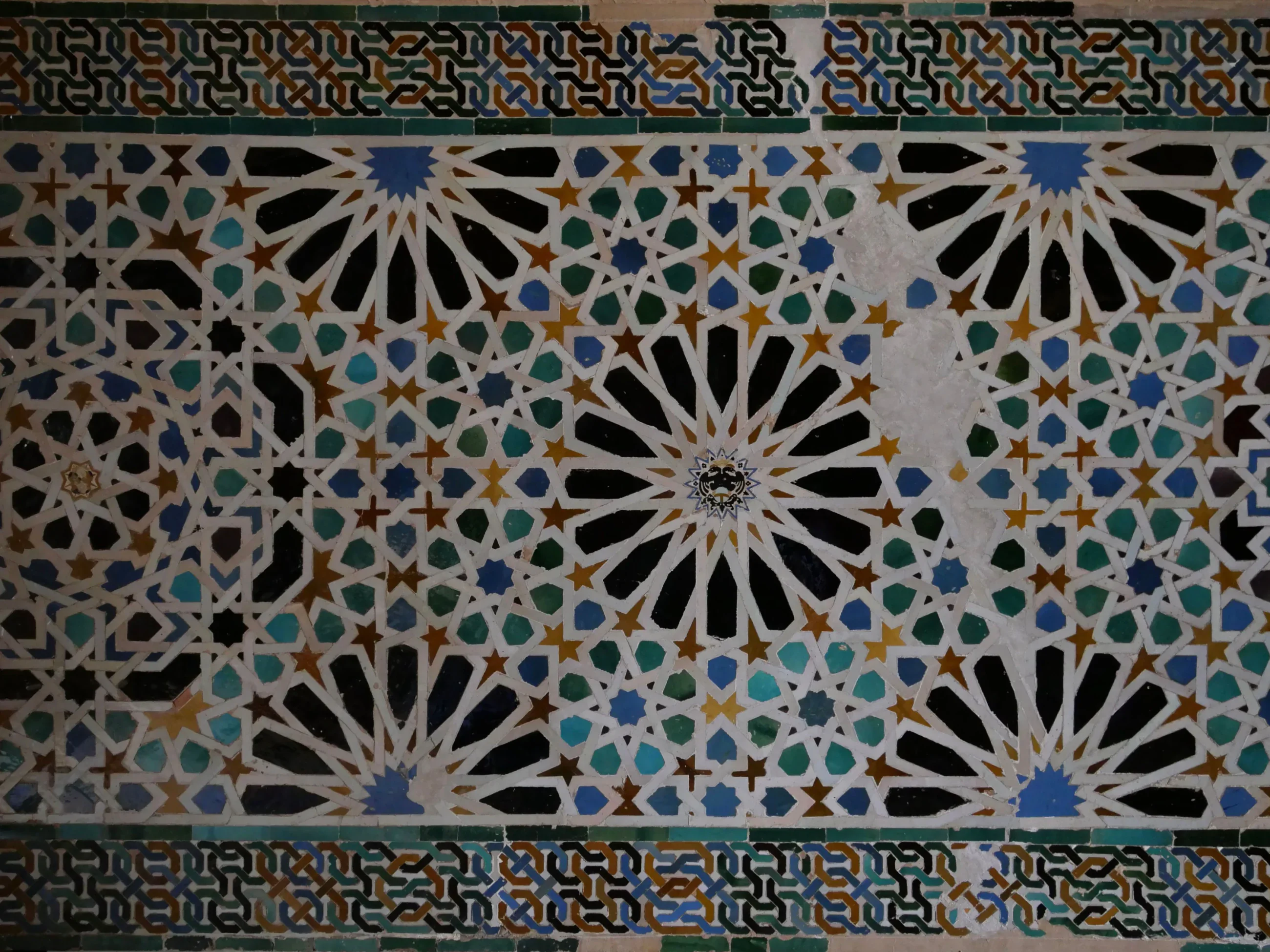
For almost eight centuries, parts of the Iberian Peninsula were ruled by Muslim dynasties. From the arrival of Muslim forces in 711 to the surrender of Granada in 1492, the political map changed constantly, kingdoms rose and disappeared, capitals moved and borders shifted. This long period is known as al-Andalus. For Muslim travelers visiting Spain today, understanding even a little of this history completely changes the experience. The Giralda in Seville becomes more than a bell tower.
The arches of Córdoba become more than beautiful decoration. The Alhambra becomes more than a palace overlooking Granada. They become pieces of a much larger story. Al-Andalus was never one single kingdom that lasted unchanged for 781 years. It passed through periods of expansion, unity, civil war, smaller rival states and rule by North African dynasties. Muslim-controlled territory gradually became smaller until only the Emirate of Granada remained. The story is complicated, but the basic timeline is surprisingly easy to follow.
711: The Beginning of Al-Andalus
The story traditionally begins in 711, when a largely Berber Muslim army led by Tariq ibn Ziyad crossed from North Africa into the Iberian Peninsula. The crossing is remembered in the name Gibraltar, derived from the Arabic Jabal Tariq, meaning “Mountain of Tariq.” At the time, most of Iberia was controlled by the Visigothic kingdom. Political divisions within that kingdom helped the Muslim forces advance quickly. Within only a few years, much of the peninsula had come under Muslim control.
The new territory became known in Arabic as al-Andalus. Exactly where that name came from is still debated, but over time it became the usual term for the Muslim-controlled parts of Iberia. At first, al-Andalus was governed as part of the wider Umayyad Caliphate, whose capital was far away in Damascus. That connection would soon change dramatically.
The Umayyad Prince Who Escaped to Córdoba
In 750, the Umayyad dynasty was overthrown in the Middle East by the Abbasids. Most members of the Umayyad ruling family were killed. One young prince escaped. His name was Abd al-Rahman ibn Mu'awiya. After years of travelling west through North Africa, he reached al-Andalus. In 756, he took control of Córdoba and established an independent Umayyad emirate. This is one of the most remarkable stories in the history of al-Andalus. A prince who had fled the destruction of his dynasty created a new Umayyad state thousands of kilometres away from Damascus.
Córdoba became its capital. In 785–786, Abd al-Rahman I began building the Great Mosque of Córdoba, which would later be expanded by his descendants into one of the greatest monuments of Islamic architecture in Europe. The red-and-white arches you see today are therefore connected to a much bigger political story: the survival of the Umayyads in the western Islamic world.
Córdoba Becomes a Caliphate
For almost two centuries, the Umayyad rulers of Córdoba used the title of emir. Then, in 929, Abd al-Rahman III declared himself caliph. The Emirate of Córdoba became the Caliphate of Córdoba, and this period is often seen as the political and cultural high point of Umayyad al-Andalus. Córdoba grew into one of the major cities of medieval Europe and the Mediterranean. It became a centre of government, scholarship, trade and craftsmanship. Libraries, mosques, gardens and palaces became part of the city's reputation.
Outside Córdoba, Abd al-Rahman III began building the extraordinary palace-city of Madinat al-Zahra. His son, al-Hakam II, expanded the Great Mosque and created its spectacular mihrab and maqsura area. This was also a society in which Muslims, Christians and Jews lived alongside one another, although the reality was more complicated than the popular image of perfect religious harmony. Periods of intellectual exchange and cooperation existed alongside legal inequality, political conflict and occasional persecution. Like most medieval societies, al-Andalus was neither a paradise of tolerance nor a story of permanent conflict. It was far more complicated than either version.
The Caliphate Falls Apart
The powerful Caliphate of Córdoba did not last. Political struggles and civil war weakened the state during the early 11th century. In 1031, the caliphate officially ended. Al-Andalus broke into numerous smaller Muslim kingdoms known as taifas. Cities such as Seville, Zaragoza, Toledo and Granada became capitals of their own rival states. This political division made al-Andalus weaker militarily, but the taifa period also produced remarkable art, poetry and architecture.
Rulers competed not only on the battlefield but also through magnificent courts and cultural patronage. The problem was that the Christian kingdoms in northern Iberia were becoming stronger. In 1085, Toledo fell to Alfonso VI of León and Castile. For the taifa rulers, the loss was alarming. They looked south to North Africa for help.
The Almoravids Arrive
The Almoravids were a powerful Berber Muslim dynasty based in North Africa. After being invited to help resist Christian expansion, they crossed into Iberia and defeated Alfonso VI at the Battle of Sagrajas in 1086. Soon, however, the Almoravids did more than assist the taifa rulers. They took control of much of al-Andalus themselves. For several decades, Muslim Iberia once again became connected politically with a large North African empire. But Almoravid rule eventually weakened, and al-Andalus divided once more. Then another North African dynasty appeared.
The Almohads and the Rise of Seville
The Almohads replaced the Almoravids as the dominant power in North Africa and took control of much of al-Andalus during the 12th century. Under Almohad rule, Seville — Ishbiliya — became the main political centre of Muslim Iberia. This is the period that gave Seville some of its most important Islamic monuments. The Almohads built a new Great Mosque with a magnificent minaret. That minaret survives today as the lower section of the Giralda.
They also strengthened Seville's fortifications and constructed defensive towers, including the Torre del Oro beside the Guadalquivir River. If you walk through Seville today, you can still follow parts of this Almohad city from the Giralda and Alcázar towards the surviving walls and river towers. But Almohad power would not last either.
1212: A Major Turning Point
In 1212, Almohad forces suffered a major defeat at the Battle of Las Navas de Tolosa against an alliance of Christian kingdoms. The battle did not end Muslim rule in Iberia immediately, but it seriously weakened Almohad power. Over the following decades, Christian kingdoms expanded rapidly southwards. Córdoba was captured by Castile in 1236. Valencia fell to the Crown of Aragon in 1238. Seville was conquered by Castile in 1248. Within a relatively short period, most of the major cities that had once defined al-Andalus were under Christian rule. But Muslim political rule in Iberia was not over. One kingdom remained.
Granada: The Last Muslim Kingdom
In the 13th century, the Nasrid dynasty established the Emirate of Granada. Granada would become the last Muslim-ruled state in Iberia and survive for more than 250 years. Its rulers controlled a smaller territory in southern Spain, including areas around Granada, Málaga and Almería. They often maintained their independence through diplomacy, tribute payments and careful relationships with both Christian kingdoms to the north and Muslim powers across the Mediterranean.
It was during this period that the Nasrids created the Alhambra. The palace complex became the political heart of the emirate and one of the great achievements of Islamic architecture in al-Andalus. Its walls still carry the Nasrid motto: Wa la ghaliba illa Allah — “There is no victor except Allah.” The phrase appears again and again throughout the palace, almost as if the building itself is repeating the dynasty's identity.
1492: The End of Muslim Rule
By the late 15th century, Granada was under increasing pressure from the united crowns of Castile and Aragon. After a long war, the last Nasrid ruler, Muhammad XII, known in Spanish sources as Boabdil, surrendered Granada to Isabella I of Castile and Ferdinand II of Aragon. On 2 January 1492, the Catholic Monarchs formally entered the Alhambra. Muslim political rule in Iberia had ended. From 711 to 1492, 781 years had passed. But that does not mean Islamic culture disappeared overnight.
Large Muslim communities remained in Spain after the conquest. Initially, agreements promised certain protections, but those conditions changed over time. Pressure to convert increased, and Muslims who formally converted to Christianity became known as Moriscos. By the early 17th century, the Spanish monarchy ordered the expulsion of the Moriscos. The political world of al-Andalus was gone. Its influence, however, remained everywhere.
Al-Andalus Did Not Simply Disappear
Walk through southern Spain today and you constantly encounter traces of this history. In Córdoba, the Great Mosque still contains hundreds of Islamic arches and its extraordinary tenth-century mihrab. In Seville, the Giralda began life as an Almohad minaret, while sections of the city's Islamic walls and towers still survive. In Granada, the Alhambra remains filled with Arabic calligraphy, Nasrid poetry, geometric decoration and flowing water. Even the Spanish language carries the history.
Thousands of Spanish words have Arabic origins, including everyday terms connected with agriculture, architecture, science, food and administration. Place names also preserve it. Guadalquivir comes from the Arabic al-wadi al-kabir, “the great river.” Almería derives from Arabic. Alcalá comes from al-qal'a, meaning fortress. Gibraltar still remembers Tariq ibn Ziyad more than thirteen centuries after his crossing. Sometimes the history is sitting in front of you without looking like history at all.
More Than a Story of Muslims and Christians
It is tempting to tell the history of al-Andalus as a simple story: Muslims arrived in 711, Christians reconquered the land and everything ended in 1492. The real story is much richer. Muslim rulers fought other Muslim rulers. Christian kingdoms fought one another. Muslim and Christian states sometimes formed alliances against other Muslims or Christians. Political loyalty did not always follow religion. Jewish communities also played important roles in the intellectual, commercial and political life of medieval Iberia, while people moved between languages and cultural traditions.
There were periods of coexistence and cultural exchange, but also periods of discrimination, rebellion, warfare and persecution. Understanding those contradictions is important. Al-Andalus does not need to be turned into a perfect lost civilisation to be fascinating. Its real history is interesting enough.
Why This History Matters When You Travel
Knowing the basic story of al-Andalus changes the way you travel through Spain. In Córdoba, you are not simply looking at beautiful arches. You are standing inside the mosque built by an exiled Umayyad dynasty that created a new capital in the West. In Seville, the Giralda becomes part of the story of the Almohads and their connections with North Africa. In Granada, the Alhambra becomes the final great royal palace of Muslim Iberia, built by a dynasty trying to survive in a rapidly changing political world.
The monuments stop feeling isolated. They become chapters of the same story. That is perhaps the best way to understand al-Andalus. Not as one kingdom that existed unchanged for 781 years, but as a long chain of different states, peoples and cultures that transformed the Iberian Peninsula. The rulers disappeared. The borders disappeared. The languages changed. But more than five centuries after Granada fell, the evidence is still everywhere. You only need to know where to look.
Planning Andalusia? Explore our halal travel guide to Andalusia. →
Planning a wider journey? Explore our Muslim travel guide to Spain. →